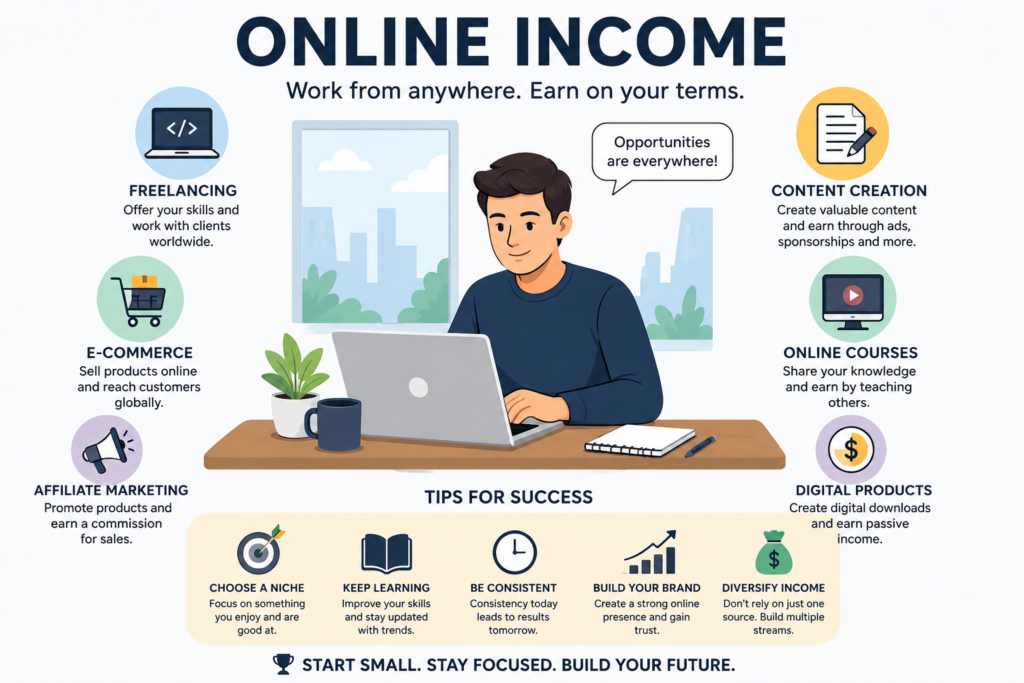
Let’s skip the part where someone promises you’ll earn $10,000 a month by next Tuesday. That’s not how this works, and you already know that.
What you probably want is a straight answer: what are the real, proven ways people are making money online right now? Which ones are worth your time, and which ones are a dead end?
That’s exactly what this guide covers. We’ve tested, researched, and ranked 15 methods based on earning potential, startup cost, and how quickly you can see results. Some of these can replace a full-time income. Others are good for an extra $500 a month. All of them are legitimate.
Pick what fits your situation and run with it.
Quick Overview: All 15 Methods at a Glance
| Method | Earning Potential | Startup Cost | Time to First Dollar |
|---|---|---|---|
| Freelancing | $1,000–$10,000+/mo | Free–$50 | 1–2 weeks |
| Online Surveys & Microtasks | $50–$300/mo | Free | Same day |
| Selling on Etsy/eBay | $500–$5,000+/mo | $20–$200 | 1–4 weeks |
| Affiliate Marketing | $100–$10,000+/mo | $50–$200 | 2–6 months |
| Content Creation (YouTube/TikTok) | $500–$50,000+/mo | Free–$500 | 3–12 months |
| Print on Demand | $200–$3,000/mo | Free–$50 | 2–6 weeks |
| Online Tutoring | $500–$4,000/mo | Free | 1 week |
| Virtual Assistant Work | $1,000–$4,000/mo | Free | 1–2 weeks |
| Cashback & Reward Apps | $20–$100/mo | Free | Same day |
| Dropshipping | $500–$10,000+/mo | $100–$500 | 2–8 weeks |
| Selling Digital Products | $200–$10,000+/mo | Free–$100 | 2–6 weeks |
| Stock Photography | $50–$1,000/mo | Free–$200 | 2–4 weeks |
| Remote Customer Service | $2,000–$4,000/mo | Free | 1–3 weeks |
| Blogging | $100–$10,000+/mo | $50–$100 | 3–12 months |
| Online Coaching/Consulting | $2,000–$15,000+/mo | Free–$200 | 1–4 weeks |
1. Freelancing
Freelancing is the fastest path to real income online if you have a marketable skill. Writing, graphic design, web development, video editing, bookkeeping, the list goes on. Platforms like Upwork, Fiverr, and Toptal connect you directly with clients who need work done now.
How to get started:
- Pick one skill you can deliver results with today.
- Create a profile on 2–3 freelance platforms.
- Price your first few gigs competitively to build reviews.
- Once you have 5–10 positive reviews, raise your rates.
What to expect: Most new freelancers land their first paid gig within two weeks. Earning $1,000–$3,000 per month is realistic within the first three months if you treat it like a job and not a hobby.
Watch out for: Clients who want “spec work” (free samples before hiring). That’s a red flag. A short portfolio or a paid test task is reasonable. Working for free is not.
2. Online Surveys and Microtasks
This won’t make you rich. Let’s be clear about that. But apps like Swagbucks, Prolific, and Amazon Mechanical Turk pay you for completing surveys, watching videos, and handling small data tasks.
Realistic earnings: $50–$300 per month, depending on how much time you invest. Prolific tends to pay better per hour than most survey sites because it sources tasks from academic researchers.
Best for: People who want to earn a little extra during downtime (commuting, waiting rooms, commercial breaks) without committing to a schedule.
Pro tip: Stick to platforms with a strong payout track record. If a survey site asks you to pay an “activation fee” or earn a suspiciously high minimum before cashing out, walk away.
3. Selling on Etsy, eBay, or Amazon
If you make handmade goods, vintage finds, or can source products at a discount, online marketplaces give you instant access to millions of buyers. Etsy is the go-to for handmade and craft items. eBay works well for flipping thrift store finds and collectibles. Amazon FBA lets you sell products at scale with Amazon handling shipping and returns.
How to get started:
- Etsy: Start with 10–20 listings. Use keyword-rich titles (Etsy search works like a search engine).
- eBay: Source items from thrift stores, garage sales, or clearance racks. List with clear photos and detailed descriptions.
- Amazon FBA: Use product research tools like Jungle Scout to find items with high demand and low competition.
What separates winners from everyone else: Photography and descriptions. A product with a professional-looking photo and a clear, benefit-focused description will outsell an identical product with a blurry phone picture every time.
4. Affiliate Marketing
You recommend a product. Someone buys it through your link. You earn a commission. That’s affiliate marketing in one sentence.
It powers a massive chunk of the internet’s content. Blog posts, YouTube reviews, comparison articles, social media recommendations. The commission structure varies by program. Amazon Associates pays 1–10% depending on the category. Software and SaaS affiliate programs often pay $50–$200 per sale or recurring monthly commissions.
The honest truth: Affiliate marketing works, but it’s a slow build. You need traffic first (through a blog, YouTube channel, or social media audience), and traffic takes time to grow. Most people who succeed with affiliate marketing don’t see meaningful income until 6–12 months in.
Where to start: Pick a niche you genuinely know something about. Sign up for affiliate programs related to that niche (Amazon Associates, ShareASale, CJ Affiliate, or direct brand programs). Create content that helps people make buying decisions.
5. Content Creation (YouTube, TikTok, Instagram)
The creator economy is real, and it’s bigger than ever. YouTube pays creators through its Partner Program once you hit 1,000 subscribers and 4,000 watch hours. TikTok’s Creator Fund pays based on views. Instagram creators typically earn through brand deals and sponsored posts.
Earning potential:
- YouTube: $3–$25 per 1,000 views (varies wildly by niche; finance and tech pay the most)
- TikTok: $0.20–$0.50 per 1,000 views through the Creator Fund (most creators earn more through sponsorships)
- Instagram: Brand deals range from $100 to $10,000+ per post depending on follower count and engagement
The catch: Building an audience takes consistent effort over months. The creators earning full-time income didn’t get there overnight. They posted regularly, studied what performed well, and improved their craft over time.
Fastest path to monetization: YouTube. Ad revenue kicks in automatically once you qualify for the Partner Program, and videos continue generating income for years after publishing.
6. Print on Demand
Design t-shirts, mugs, phone cases, or posters. Upload your designs to a print-on-demand platform like Printful, Redbubble, or Merch by Amazon. When someone orders, the platform prints and ships the product. You never touch inventory.
Startup cost: Essentially zero if you create designs yourself using free tools like Canva. If you hire a designer, expect to pay $5–$50 per design on Fiverr.
What actually sells: Niche-specific designs with a clear audience. “Dog mom” shirts outsell generic abstract art. Inside jokes for nurses, teachers, engineers, or any specific community tend to perform well. The more specific, the better.
Realistic timeline: Your first sale could come within a week on Redbubble (which has built-in traffic) or 2–4 weeks on your own Shopify store with some marketing effort.
7. Online Tutoring
If you’re strong in a subject, whether it’s math, science, English, test prep, or a musical instrument, online tutoring is one of the most straightforward ways to earn $25–$80 per hour.
Platforms to consider:
- Wyzant – Set your own rates. You keep 75% of what you charge.
- Tutor.com – Pays $15–$25/hour. More structured, with set hours.
- Preply – Popular for language tutoring. You set your own rates and schedule.
- Varsity Tutors – Higher-end platform with competitive pay for qualified tutors.
No degree? No problem. While some platforms require credentials, many accept tutors based on skill and subject knowledge alone. If you can demonstrate expertise through a short assessment or interview, you’re in.
8. Virtual Assistant (VA) Work
Businesses, entrepreneurs, and busy professionals need help with email management, scheduling, data entry, social media posting, and customer follow-ups. That’s where virtual assistants come in.
How to land VA clients:
- Start on platforms like Belay, Time Etc, or Upwork.
- Offer a specific service bundle (e.g., “email and calendar management” or “social media scheduling”) instead of listing everything you can do.
- Pitch directly to small business owners on LinkedIn or through cold email.
Pay range: $15–$35/hour for general VA work. Specialized VAs (bookkeeping, project management, tech setup) can charge $40–$60/hour.
Growth potential: Many VAs build small agencies over time, hiring subcontractors and managing multiple clients. A solo VA earning $3,000/month can scale to $8,000–$15,000/month with a small team.
9. Cashback and Reward Apps
This is the lowest-effort entry on the list. Apps like Rakuten, Ibotta, Fetch Rewards, and Dosh give you cash back on purchases you were already going to make.
What to expect: $20–$100 per month if you shop regularly and stack multiple apps. Not life-changing, but it’s free money for scanning receipts and clicking through a link before buying online.
Best strategy: Install Rakuten’s browser extension for automatic cashback on online purchases. Use Ibotta for grocery shopping. Use Fetch Rewards to scan every receipt (it finds rebates automatically).
10. Dropshipping
You set up an online store, list products, and when a customer places an order, a third-party supplier ships the product directly to them. You never handle the product yourself.
Platforms: Most dropshippers use Shopify paired with sourcing tools like DSers (AliExpress integration), Spocket (US/EU suppliers), or CJ Dropshipping.
The reality check: Dropshipping gets a lot of hype, and a lot of that hype is misleading. The business model works, but profit margins are thin (15–30% is typical), and customer service headaches are real. Shipping times from overseas suppliers can stretch to 2–4 weeks, which leads to complaints and chargebacks.
What successful dropshippers do differently: They build a brand. Instead of selling random “winning products,” they create a niche store with a cohesive identity, fast-shipping suppliers (ideally US or EU-based), and a real customer experience. That’s the difference between a store that lasts six months and one that generates income for years.
11. Selling Digital Products
Create something once, sell it forever. Digital products, such as templates, spreadsheets, eBooks, online courses, Notion dashboards, Lightroom presets, and Canva templates, have near-zero production cost after the initial creation.
Where to sell:
- Gumroad – Simple setup, no monthly fees. Great for creators just starting out.
- Teachable / Kajabi – Best for online courses.
- Etsy – Surprisingly strong for digital downloads (planners, templates, printables).
- Your own website – Maximum control and no platform fees.
What sells well in 2026: Notion templates, budget spreadsheets, resume templates, social media content calendars, and mini-courses ($27–$97 price point). The key is solving a specific problem for a specific group of people.
12. Stock Photography and Video
If you have a decent camera (or even a modern smartphone), you can upload photos and video clips to stock platforms and earn royalties each time someone licenses your work.
Top platforms: Shutterstock, Adobe Stock, iStock, and Pond5 (for video).
What sells: Business and workplace imagery, lifestyle photos with diverse models, food photography, and nature/travel shots. Authentic, natural-looking photos consistently outsell overly staged or stock-looking images.
Income timeline: Don’t expect much for the first few months. Stock photography is a volume game. Photographers with 500+ quality images in their portfolio start seeing consistent monthly income. It’s a slow burn, but the passive nature makes it worthwhile if you enjoy photography.
13. Remote Customer Service
Major companies hire remote customer service representatives, often with no experience required. Apple, Amazon, Liveworld, and dozens of smaller companies post remote customer service positions regularly.
Pay range: $14–$22/hour, with some specialized roles (tech support, account management) paying $25+/hour.
Where to find these jobs: FlexJobs, We Work Remotely, Remote.co, and the careers pages of major companies. Be cautious of “customer service jobs” that require you to pay for a “starter kit.” Legitimate employers never charge you to start working.
Best fit for: People who want steady, predictable income with set hours. Unlike freelancing or content creation, you get a paycheck every two weeks without hustle or self-promotion.
14. Blogging
Blogging in 2026 is a legitimate business. Successful bloggers earn through display ads (Mediavine, Raptive), affiliate links, sponsored content, and digital product sales.
The honest timeline:
- Months 1–3: Building your site, publishing content, learning SEO. Income: $0.
- Months 3–6: Traffic starts trickling in from search engines. Income: $0–$100.
- Months 6–12: Consistent traffic growth if your content is solid. Income: $100–$1,000.
- Year 2+: Compounding returns as older posts rank higher and new posts build on existing authority. Income: $1,000–$10,000+.
What works right now: Long-form, experience-based content that answers specific questions. Google’s algorithm rewards content written by someone who has actually done the thing they’re writing about. First-hand experience, original data, and practical advice outperform generic rehashed content.
Startup cost: ~$50–$100/year for hosting (SiteGround, Cloudways, or Hostinger) and a free WordPress theme to start.
15. Online Coaching and Consulting
If you have expertise in a field (fitness, nutrition, business strategy, career development, marketing, finance), people will pay for one-on-one guidance.
How to price your services:
- New coaches with no track record: $50–$100/hour
- Experienced coaches with testimonials and results: $150–$500/hour
- High-end business or executive coaching: $500–$2,000+/hour
Where to find clients: LinkedIn is the single best platform for coaches and consultants. Posting content that demonstrates your expertise attracts inbound leads over time. You can supplement with a simple website, a booking tool like Calendly, and a Zoom account.
Scaling beyond 1-on-1: Group coaching programs ($997–$2,997) and online courses let you serve more people without trading every hour for dollars. Many coaches start with 1-on-1 clients, package their process into a course, and eventually shift to a mix of both.
How to Pick the Right Method for You
With 15 options on the table, here’s a simple framework for choosing:
If you need money this week: Online surveys, cashback apps, or freelancing on Fiverr (small gigs pay quickly).
If you have a skill and want steady income: Freelancing, virtual assistant work, online tutoring, or remote customer service.
If you’re willing to invest 6–12 months for bigger returns: Blogging, affiliate marketing, content creation, or building a digital product business.
If you want hands-off, passive income over time: Print on demand, stock photography, digital products, or a blog with display ads.
The biggest mistake people make is trying three or four methods at once. Pick one. Give it 90 days of focused effort. If it’s working, double down. If it’s not, switch.
Common Scams to Avoid
A few red flags that signal a “money-making opportunity” is actually a scam:
- You have to pay to start. Legitimate employers and platforms don’t charge upfront fees.
- The income claims are too specific. “Earn $347.82 per day” is a made-up number designed to sound believable.
- They pressure you to sign up immediately. Real opportunities don’t disappear in 24 hours.
- The “testimonials” look fake. Stock photos with generic names and suspiciously perfect stories are a clear warning sign.
- They won’t explain how you’ll earn money. If the business model is vague or confusing, that’s intentional.
Stick to platforms and methods with verifiable track records, public reviews, and transparent payout structures.
Start Today, Not Tomorrow
Every method on this list works. People are earning real money with each one right now. The difference between people who earn online and people who don’t isn’t talent, luck, or some secret formula. It’s action.
Pick one method from this list. Set up an account. Complete your first task, publish your first piece of content, or send your first pitch. That one step puts you ahead of everyone still “thinking about it.”
Bookmark this page. Come back when you’re ready to try the next method on your list.